Hundreds of Indian Students Are Losing Their German Visas Over One Word: Hybrid
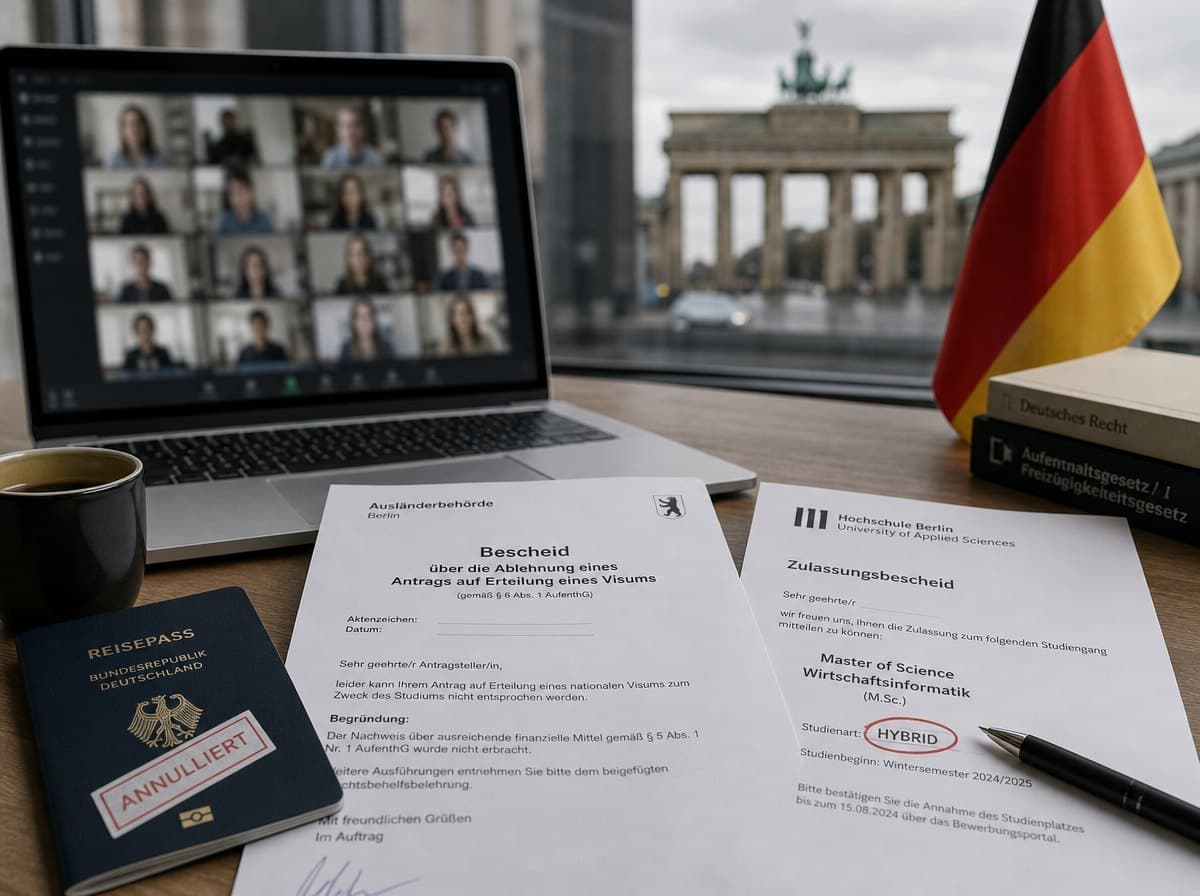
More than five hundred Indian students at IU International University of Applied Sciences in Berlin have received letters telling them to leave Germany. Not because of anything they did wrong personally. Not because of a missed exam or a visa paperwork slip. Because the program they enrolled in, a hybrid mix of online coursework and campus sessions, no longer counts as full time study in the eyes of Berlin's immigration office.
Some of these students have already spent between twenty and thirty thousand euros on tuition, housing deposits, and blocked account funds. One student told Euronews he is now dealing with immigration officials instead of finishing his master's thesis. Another said he was aware of roughly three hundred similar cases just among people he knows personally.
This is not a small story, and it is not one people saw coming when they signed up.
What actually happened
IU Berlin is Germany's largest private university, with more than a hundred thousand students enrolled and around 4,500 of them Indian. Its hybrid model let students complete part of a program online, often from India, before relocating to Berlin to finish in person. Education agents marketed this as flexible and convenient, and for years the Berlin immigration authority appears to have accepted it.
That changed. Berlin's Landesamt für Einwanderung, the local agency that handles residence permits, began scrutinizing IU's format more closely starting in early 2025, reportedly after complaints about low attendance and weak oversight. The agency concluded that sessions counted as online by the university did not meet the legal bar for in person study, which meant the residence permits tied to that program were no longer valid on renewal.
A court ruling backed the stricter reading. That matters more than it might seem, because Germany also abolished remonstration, the informal appeal process that used to let a rejected applicant ask a consulate or agency to take a second look without going to court. That happened in July 2025, and we wrote about what that change means for visa applicants generally. For the IU students, it means their fastest and cheapest path to challenge the decision simply does not exist anymore. What is left is a formal legal case that can run for months, while their permission to stay keeps ticking down.
IU has since said it will move to full in person teaching in Berlin and is offering transfers to campuses that already run that way. For students already holding an exit order, that offer helps less than it sounds like it should. A transfer still means a new lease, a new deposit, and no guarantee the immigration office accepts the fix retroactively.
The part that should worry every applicant, not just IU students
Here is the detail that gets lost in the outrage: the students didn't do anything wrong. They picked a program that was openly advertised, actively recruited for by placement agencies, and had operated for years without this problem surfacing. The rules didn't change on paper. The interpretation did, and it changed after they had already paid.
That is the actual lesson. A program description that sounds reasonable to you and to the agent selling it can still fail an immigration office's internal reading of "full time," and you often cannot know in advance which way that reading will go. What you can do is stack the odds in your favor before you commit any money.
A few checks worth doing before you enroll anywhere, private or public:
- Look the institution up in anabin, the German government's database of recognized foreign and domestic qualifications, and confirm the specific program is listed, not just the university's name
- Ask directly, in writing, what percentage of contact hours happen physically on campus and get that answer from the university's international office, not from a recruiting agent
- Check whether the program has existed in its current format for at least a full admissions cycle with students who have already gone through a visa renewal successfully
- Compare the private option against a public university alternative in the same field, since public universities in Germany report meaningfully higher visa approval and renewal rates
- Ask what happens to your residence status specifically if the program format changes after you arrive, and get that answer before signing anything, not after
None of this replaces legal advice if you are already caught in a situation like this one. But it is the kind of due diligence that would have flagged real risk in the IU case before anyone wired a euro.
Where language actually fits into this
Your German level has nothing to do with why these students are losing their status. This is a program accreditation and attendance problem, not a language problem. But it is worth saying plainly: a strong German level is still the thing that protects you most once you are actually enrolled and dealing with any kind of institutional or immigration back and forth. Reading a residence permit renewal notice correctly, following up with a Sachbearbeiter in German instead of through a translated email, understanding what an immigration lawyer is telling you without losing nuance in translation, all of that gets harder the shakier your German is. At Germanly we built our courses around getting learners past guesswork to a level they can actually rely on in situations exactly like this one, not just to a certificate.
If you are still choosing between programs for a 2026 or 2027 intake, treat the format question with the same seriousness you would give a scholarship deadline. The paperwork side of studying in Germany has gotten less forgiving this year, not more, and the IU case shows that even a well marketed, long running program is not automatically safe.
If your own visa timeline is tight right now, the visa safety net breakdown we published last month covers the blocked account and appeal changes in more detail, and it is worth reading alongside this one before you finalize anything.
Start your own German story
A1 to B2 — vocabulary, grammar, real audio and AI feedback. First three lessons free.