Germany Raised the Student Work Limit to 140 Days. Your German Decides What Those Days Pay
If you are heading to Germany for the winter semester, you have probably already seen the headline. International students can now work up to 140 full days or 280 half days a year, up from the old cap of 120 and 240. Combined with the 2026 minimum wage of 13.90 euros an hour, that sounds like a meaningful bump in what you can earn while studying. It is, but only for some students. For everyone else, the extra days just mean more hours at the same low rate they were already working.
The gap between those two groups has almost nothing to do with the visa or the university. It comes down to German.
What the new limit actually changes
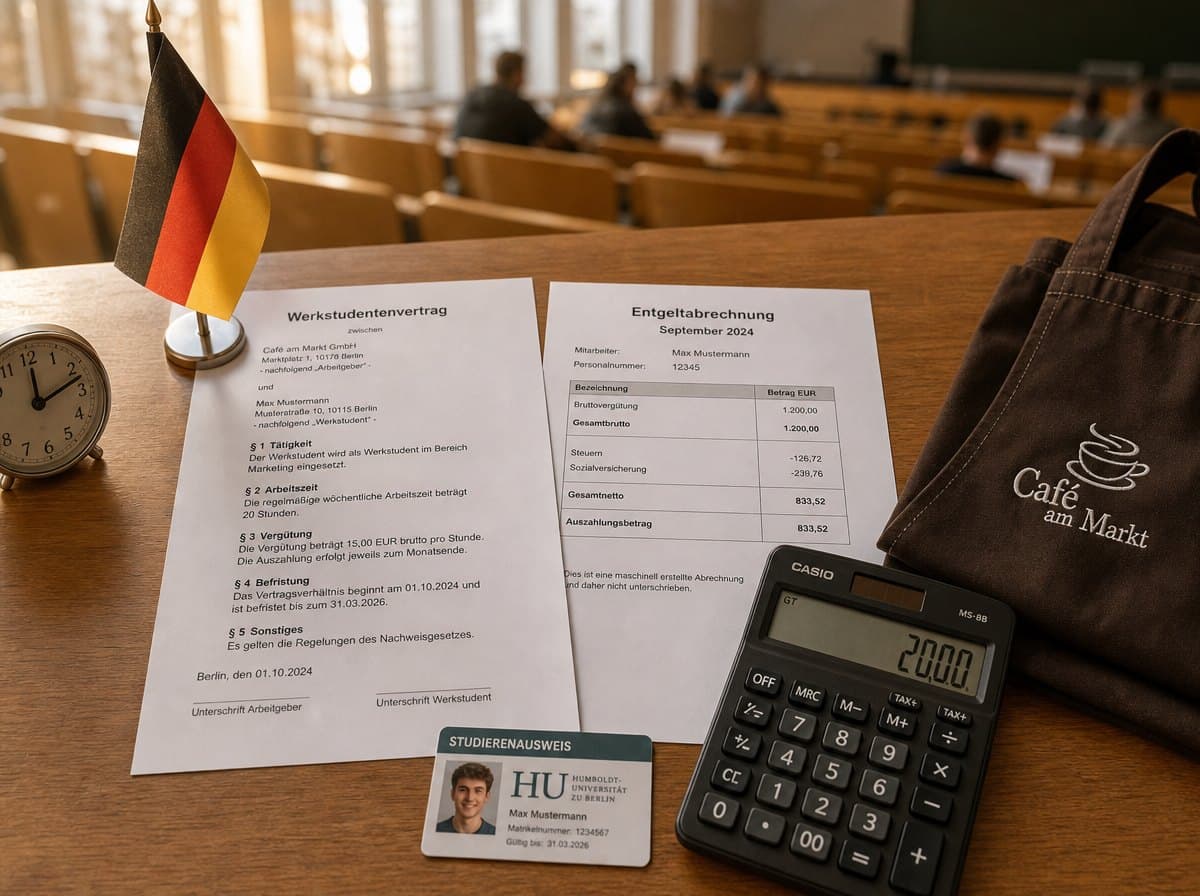
The 140 day cap is generous on paper. Spread across a year with unlimited full time work allowed during semester breaks, a student who plans well can genuinely clear 12,000 euros or more annually without touching a work permit application. Werkstudent roles, the standard part time positions tied to your field of study, typically pay between 14 and 25 euros an hour and count toward your degree relevant experience at the same time.
The problem is that almost none of those roles are open to someone who cannot hold a conversation in German. Job postings for Werkstudent positions at companies like SAP, Bosch, or a mid sized Mittelstand firm assume you can sit in a team meeting, read an internal wiki, and answer a phone call without switching to English halfway through. English only postings exist, mostly in Berlin and Munich tech, but they are a small slice of a much larger market, and competition for them is fierce precisely because every other international student is chasing the same handful of listings.
Without German, your 140 days get spent differently. You are looking at:
- Minijobs capped at 538 euros a month, tax free, mostly in retail, delivery, or hospitality
- Warehouse and logistics shifts, often through staffing agencies, paid close to minimum wage
- Campus cafeteria or library work, if your university offers it, which rarely pays above minimum wage either
None of these are bad ways to cover groceries. But they max out well below what a Werkstudent role pays, and they rarely lead anywhere once your degree ends. A minijob does not become a job offer. A Werkstudent position, done well for a year or two, frequently does.
The level that actually opens doors
You do not need C1 German to qualify for most Werkstudent listings. B1 with some confidence gets you through a surprising number of interviews, especially in engineering and IT roles where technical vocabulary carries part of the conversation. B2 is where the real expansion happens: HR, marketing, customer facing roles, and the better paying positions at larger firms start showing up as realistic options rather than long shots.
This tracks with something we have written about before. The gap between the German level a visa technically requires and the level that actually gets you hired shows up again and again, whether the context is a work visa, an Ausbildung contract, or in this case a part time job while you study. The legal minimum and the functional minimum are rarely the same number, and the difference is usually one full CEFR level.
If you are already deep into your visa paperwork, the timing pressure is real too. We covered how tight the current student visa timeline has gotten, and the same logic applies here: the earlier your German is solid, the more of your first semester you spend applying for real Werkstudent roles instead of scrambling for a minijob to cover rent while you catch up on the language later.
A quick gut check before you land
Ask yourself where you actually stand, not where your app streak says you stand.
- Can you understand a two minute voicemail in German without replaying it three times
- Can you explain your degree and your work interests in German for 90 seconds without switching to English
- Have you read a real job posting in German recently, not a translated one
If the honest answer to any of those is no, that is worth fixing before your first semester starts, not during it. This is the exact gap Germanly is built around, getting learners past app level familiarity into the kind of working German that holds up in a real interview, not just an exam room. A vocabulary streak does not prepare you for a hiring manager asking a follow up question you did not expect.
The number that matters more than 140
140 days is a ceiling, not a guarantee. What determines whether you spend those days stacking boxes for 13.90 an hour or working a Werkstudent role for 20 euros an hour building your CV is the same thing it has always been for international students in Germany. Not the paperwork, not the university, not even the job market. Your German level sets the ceiling on what your work permission is actually worth, and that ceiling moves the moment you do.
Start your own German story
A1 to B2 — vocabulary, grammar, real audio and AI feedback. First three lessons free.