The Ausbildung Visa Only Requires B1 German. Almost Nobody Tells You What Happens After
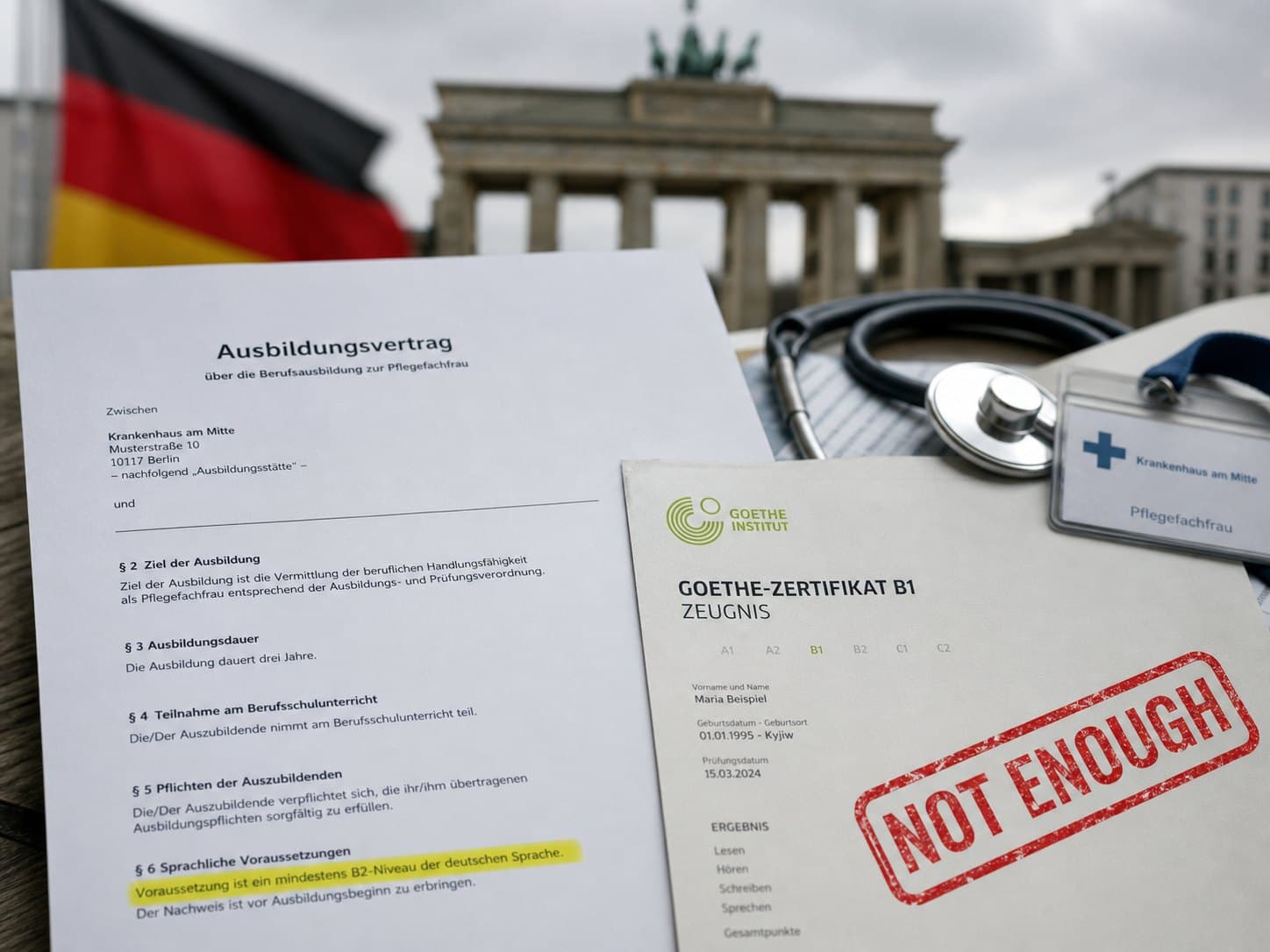
Every Ausbildung guide repeats the same line: you need B1 German for the visa. That's true. It's also the least useful piece of information in the whole process, because B1 is the floor the immigration office checks, not the bar employers are actually applying when they decide who to train.
I keep running into this gap in conversations with people planning the Ausbildung route from India. They treat B1 as the finish line because that's what §16a of the Aufenthaltsgesetz asks for on paper. Then they start applying to actual training positions and discover the chamber of commerce, the employer, or the hospital wants something closer to B2, and nobody flagged that earlier when it would have actually mattered.
What the visa law actually says
The legal requirement for an Ausbildung visa is a B1 German certificate, full stop. That's the number embassies check, and it's genuinely enough to get the visa stamped. Germany currently recognizes over 320 official training occupations, everything from mechatronics to hospitality to eldercare, and B1 is the stated floor across nearly all of them.
If your only goal is clearing the visa interview, B1 does the job. The problem is that the visa is the easiest part of this whole process, not the hardest one.
Why employers quietly moved the bar to B2
Chambers of commerce, the IHK and HWK bodies that oversee most Ausbildung contracts, routinely recommend B2 even where the legal minimum stays at B1. Employers have picked up on this because they're the ones who have to deal with a trainee who can pass a visa interview but can't follow a safety briefing on a factory floor or take instructions during a fast paced shift.
That gap between legal minimum and hiring reality shows up constantly once you start looking at actual employer listings rather than visa guides. A training contract, an Ausbildungsvertrag, is something an employer signs voluntarily. They're not required to accept a B1 candidate just because B1 clears the government's bar, and increasingly they don't.
Nursing is where this gets expensive
Nowhere is the B1 versus B2 gap sharper than nursing, which also happens to be one of the occupations India sends the most Ausbildung applicants toward, given the shortage. You can technically enter as a Pflegehilfskraft, a nursing assistant role, at B1. But most hospitals now want B2 before they'll even sign the contract, and many add a separate medical language exam, the Fachsprachprüfung, on top of general German proficiency.
The pay gap tracks the language gap almost exactly. A nursing assistant working at the B1 tier earns roughly €2,907 to €3,629 a month. Once you're fully recognized, which effectively requires B2 plus the medical vocabulary exam, that range moves to €3,510 to €4,489. That's not a small bump for a few extra months of study. It's the difference between the entry level track and the actual career track, and the language level is what separates them.
What actually happens to people who stop at B1
This is the part that doesn't show up in the glossy Ausbildung guides. A few patterns repeat constantly:
- They pass the B1 exam, get the visa, and land in Germany only to realize the vocational school lectures move at a pace built for B2 comprehension
- They can hold a personal conversation fine but freeze when technical or workplace specific vocabulary comes up, because B1 training rarely covers it
- They get offered the lower paying entry role instead of the one they actually wanted, purely because the employer read the language level as a risk
- They end up studying German intensively during their first months on the job anyway, except now they're doing it exhausted, after full shifts, instead of before they left home
None of that is a failure of effort. It's what happens when the target people prepare for, the visa's B1 minimum, is quietly different from the target that actually determines their options once they arrive.
What to actually do if Ausbildung is your plan
If you're building toward an Ausbildung position, especially in nursing, healthcare, or anything client facing, treat B2 as the real number from day one rather than something you'll get to eventually. A few concrete moves:
- Don't stop studying the moment you pass a B1 exam. Keep going straight through to B2 before you start applying to training positions, not after you arrive
- Ask any employer or agency directly what language level they actually expect in practice, not just what the visa requires, before you commit months to a specific pathway
- If you're aiming at nursing or another regulated field, look up whether a Fachsprachprüfung applies to your target role early, since that's a separate exam most people don't hear about until they're already in Germany
- Build listening comprehension for fast, unscripted speech specifically, since that's usually the first thing that breaks down in a real workplace even for people who tested well on paper
This is the exact gap Germanly is built to close: getting learners to a B2 level of actual working ability, not just a B1 certificate that satisfies a visa office and then runs out of road. If you're stuck around B1 and not sure why the next stage feels so much harder, we broke down why that plateau happens and how to push through it. And if you're weighing the Ausbildung route against the skilled worker path, our piece on how B1 changes the permanent residency timeline for Blue Card holders covers the other side of that decision.
B1 will get you through the door. It's B2 that decides which room you end up in once you're inside.
Start your own German story
A1 to B2 — vocabulary, grammar, real audio and AI feedback. First three lessons free.