B1 German Doesn't Just Get You the Visa. It Cuts Years Off Your Permanent Residency Wait
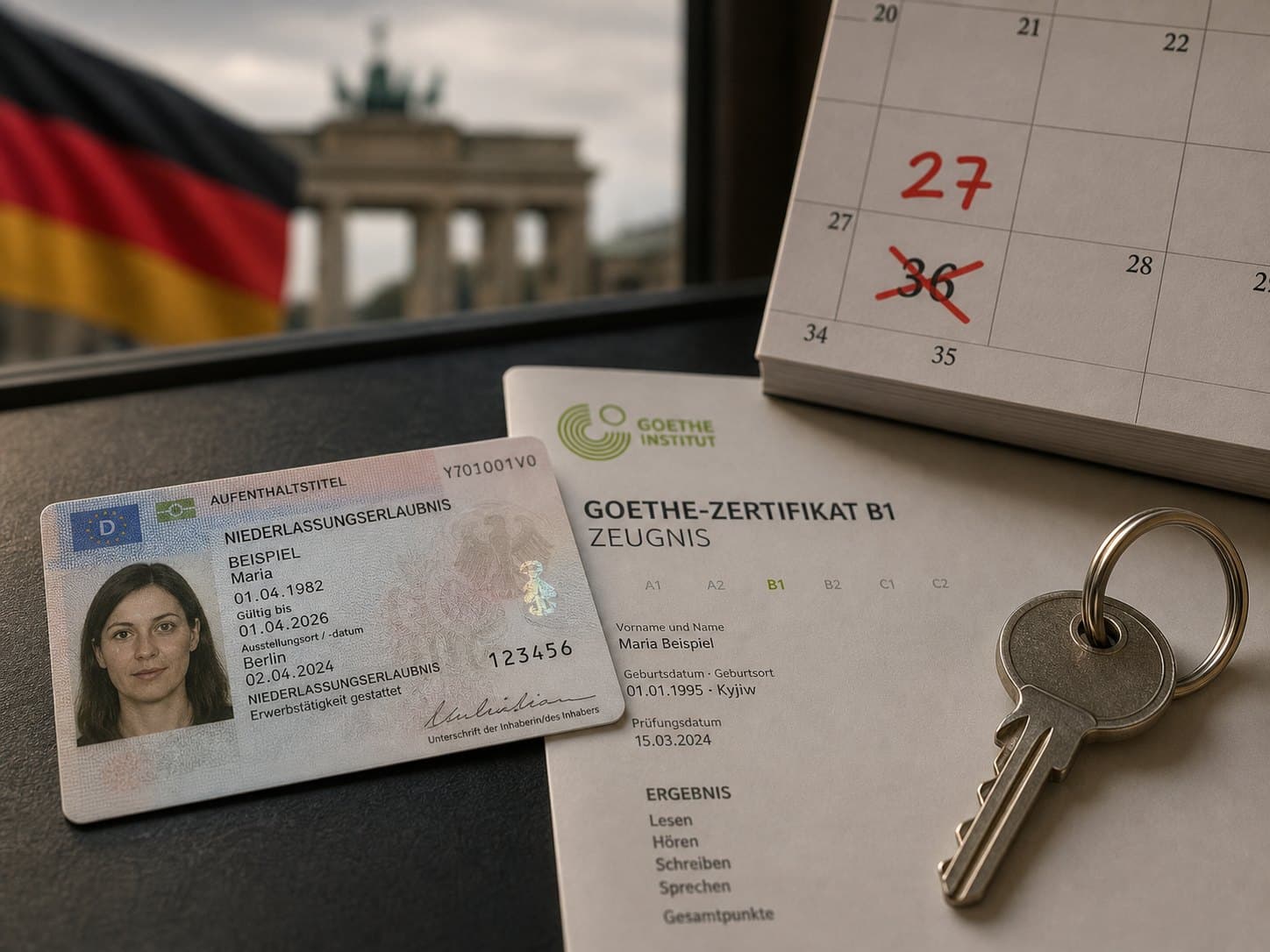
Most people preparing to work in Germany treat B1 German as a box to tick before the visa appointment. Pass the exam, submit the certificate, move on. That framing misses something bigger, and it's costing people years of their life without them realizing it.
If you're on the EU Blue Card, which is the route most skilled Indian professionals actually use to work in Germany, your German level directly changes when you're eligible for permanent residency, the Niederlassungserlaubnis. Not your salary. Not your job title. Your language certificate.
The math nobody walks you through
Here's how the timeline actually breaks down for Blue Card holders in highly qualified employment who've been paying into the German pension system:
- With B1 German, you can apply for permanent residency after 21 months
- With only basic, conversational German (roughly A1 level), the wait stretches to 27 months
- Without the Blue Card fast track at all, on a standard work visa, you're looking at 5 years
Twenty one months versus five years is not a rounding error. It's the difference between settling your immigration status while you're still finding your feet in a new country and spending your late twenties or early thirties renewing temporary permits and wondering if a job change will reset your clock.
And this isn't a rumor from a visa consultant's blog. It's written into how the Aufenthaltsgesetz treats Blue Card holders: German proficiency at B1 shortens the qualifying period for settlement, full stop.
Why Indian applicants specifically should care
India is currently the single largest source country for Germany's Opportunity Card, accounting for close to a third of all cards issued worldwide. Indian professionals also received over 21,000 EU Blue Cards in a recent single year, close to a quarter of everything issued. If you're reading this from Bangalore, Pune, or Hyderabad planning a move, you are not an edge case. You're part of the largest applicant pool Germany currently has, which also means the competition for good roles, sponsorships, and eventually settlement is real.
Starting 2026, the minimum salary threshold for a standard Blue Card role sits around €50,700 a year, or about €45,934 for shortage occupations like IT, engineering, and healthcare. Germany has also opened a path for IT specialists to qualify without a university degree if they have at least three years of relevant experience. More people are eligible than ever. Which means the language certificate, something entirely within your control, is becoming one of the few variables that actually differentiates how fast your life in Germany stabilizes.
What B1 requires that A2 doesn't
A2 gets you through basic transactions: ordering food, asking directions, filling out a form with help. B1 is a different animal. At B1 you're expected to:
- Handle a conversation about work, opinions, or plans without switching to English mid sentence
- Understand the main points of a fairly fast, unscripted conversation between two German speakers
- Write a coherent email or short report, not just a form
- Follow instructions given verbally in a meeting or at a doctor's office without asking for repetition
That's a real jump, and it's exactly why so many learners stall out right before reaching it. We wrote about that specific plateau and why it happens around B1 in more depth, if that's where you are right now.
The mistake that costs people the most time
The people who struggle aren't lazy. They're usually studying for the wrong outcome. They cram vocabulary lists and grammar tables for a couple of months, pass a B1 exam on a good day, and then discover in Germany that they can read a menu but can't follow their manager in a Monday standup. Certificate says B1. Actual ability says A2 with good exam technique.
This matters because immigration authorities check the certificate, but your actual life in Germany runs on the ability, not the paper. If your German stalls the moment the exam is over, you'll spend your first year abroad relearning the language you supposedly already passed, at the exact time you have the least spare energy for it between a new job, a new city, and new everything else.
This is the gap Germanly focuses on closing: building the certificate and the underlying ability at the same time, so B1 on paper actually means B1 in a meeting room. It's a slower process than memorizing for an exam date, but it's the version that holds up once you land.
What to actually do with this
If a move to Germany is somewhere in your plan, even eighteen months out, don't wait until the visa paperwork forces the language question. Start now, aim past A2 deliberately, and treat B1 as the real target from day one rather than a stretch goal you'll get to later. If you're already deep into visa logistics and dealing with deadlines, our breakdown of common language proof mistakes during application season covers the administrative side of this same problem.
The certificate takes months either way. The only question is whether those months buy you a 21 month path to settling permanently, or a 5 year one spent in visa limbo. That's not a small difference to leave to chance.
Start your own German story
A1 to B2 — vocabulary, grammar, real audio and AI feedback. First three lessons free.