ChatGPT Can Help You Learn German. It Just Won't Slow Down Unless You Tell It To
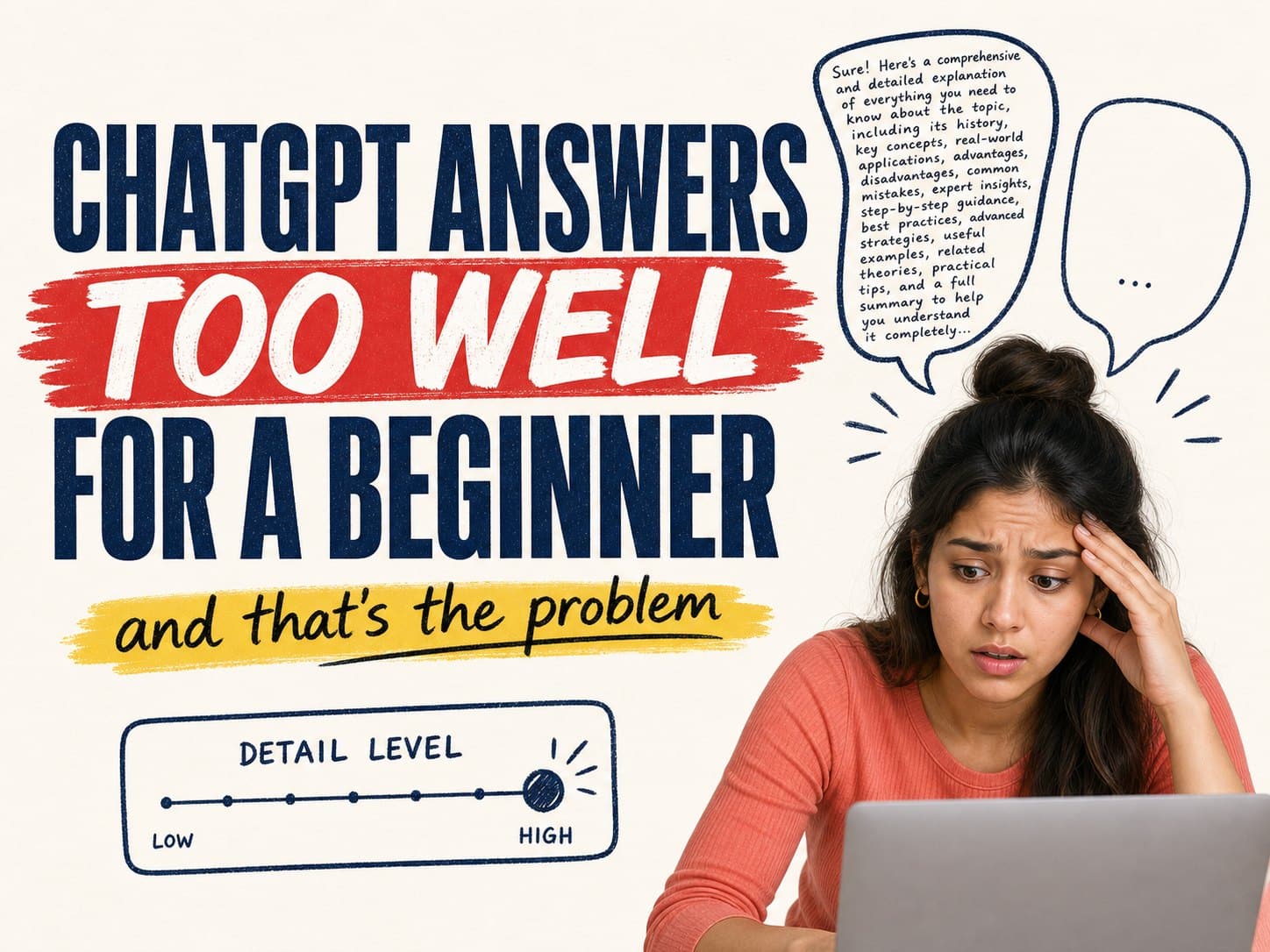
Ask around in any language learning forum right now and someone will tell you to just practice German with ChatGPT. Free, available at 2am, never judges your grammar out loud. The advice isn't wrong. But a piece of research published this year points at exactly why so many beginners try this, get discouraged within a week, and quietly go back to an app instead.
The problem isn't that ChatGPT can't do German. It's that by default, it talks to you like you're already fluent.
The complexity problem nobody warns you about
Researchers testing large language models as conversation partners for language learners found something specific: most models generate text at a near native level of complexity regardless of who they're talking to. Ask a beginner level question in German, get back a reply full of subjunctive clauses, idiomatic phrasing, and vocabulary that would trip up someone two years into learning the language, let alone two weeks in.
The same research found that with deliberate prompting, comprehensibility for beginner learners jumped from 39.4 percent to 83.3 percent. That's not a small tweak. That's the difference between opening a chat window and immediately feeling lost, and opening one that actually meets you where you are.
Most people never make that adjustment because nothing tells them it's needed. You open ChatGPT, type "let's practice German," and it responds the way it would to anyone else on the internet: confidently, fluently, and several levels above where you actually are.
What to type instead
The fix isn't a different app. It's being specific about the constraint you're working within, the same way you'd tell a tutor "I'm at A2, please" before a lesson. A few prompts that actually change the output:
- State your CEFR level up front, every time. "I'm an A2 German learner. Respond only using vocabulary and grammar appropriate for A2, and keep sentences short." Repeat this at the start of a new chat, not just once at the beginning of a long conversation, because the model drifts back toward complexity as the exchange goes on.
- Ask for corrections in a specific format. "Correct my German, but explain the mistake in English and show me the corrected sentence in German. Don't rewrite the whole thing, just fix what's wrong." Without this, you get a clean rewritten sentence with no idea what you actually got wrong.
- Cap the vocabulary. "Use only words a Goethe A2 or B1 wordlist would include. If you need a word outside that list, explain it simply first." This alone removes most of the idiom problem.
- Ask it to slow down mid conversation, not just at the start. If a reply comes back too dense, say so directly: "That was too complex, simplify it and try again at A2 level." Treat the first response as a draft, not the final word.
None of this takes more than a sentence or two of setup. It's just a sentence most learners never think to write, because nothing in the interface prompts you to.
What it still won't do for you
Even with perfect prompting, there's a ceiling here worth being honest about. A chatbot can correct your written German instantly and patiently, and that's genuinely useful for building sentence level confidence. What it can't do is force you to produce spoken language under time pressure, the exact skill that a Goethe or telc speaking module actually tests, and the skill that falls apart first when someone switches from typing to talking. Duolingo has the same blind spot for different reasons: plenty of ways to feel like you're making progress without ever practicing the part that gets graded on exam day.
It also can't issue you a certificate, track whether your B1 is actually B1 or a generous A2, or tell you when you're plateauing versus genuinely ready to move up a level. That gap between feeling fluent in a text chat and holding up in a real conversation is part of why Germanly builds structured speaking practice with real feedback into its course path, instead of leaving learners to figure out on their own when a chatbot conversation stopped being useful practice and started being a comfortable loop.
A workable routine
If you're going to use an AI chatbot as part of your German practice, treat it as one tool in a rotation, not the whole plan:
- Ten minutes in the morning: ask for a short A2 or B1 level conversation on a topic from your day, with the level constraint stated up front.
- Correct your own writing with it during the week, using the specific correction format above so you learn from the mistake instead of just seeing a fixed sentence.
- Save actual speaking practice, with a person or a structured course, for the skill a chatbot fundamentally can't train.
- Every few weeks, check your level against a real exam sample instead of how the chat "feels." Confidence in a text window and readiness for a Goethe exam are not the same measurement, a distinction we get into in our piece comparing Goethe and telc certificates.
The tool is genuinely useful. It just needs to be told, explicitly and often, to stop talking to you like you already live there.
Start your own German story
A1 to B2 — vocabulary, grammar, real audio and AI feedback. First three lessons free.