Goethe or Telc? The German Certificate Choice Nobody Explains Before Your Visa Deadline
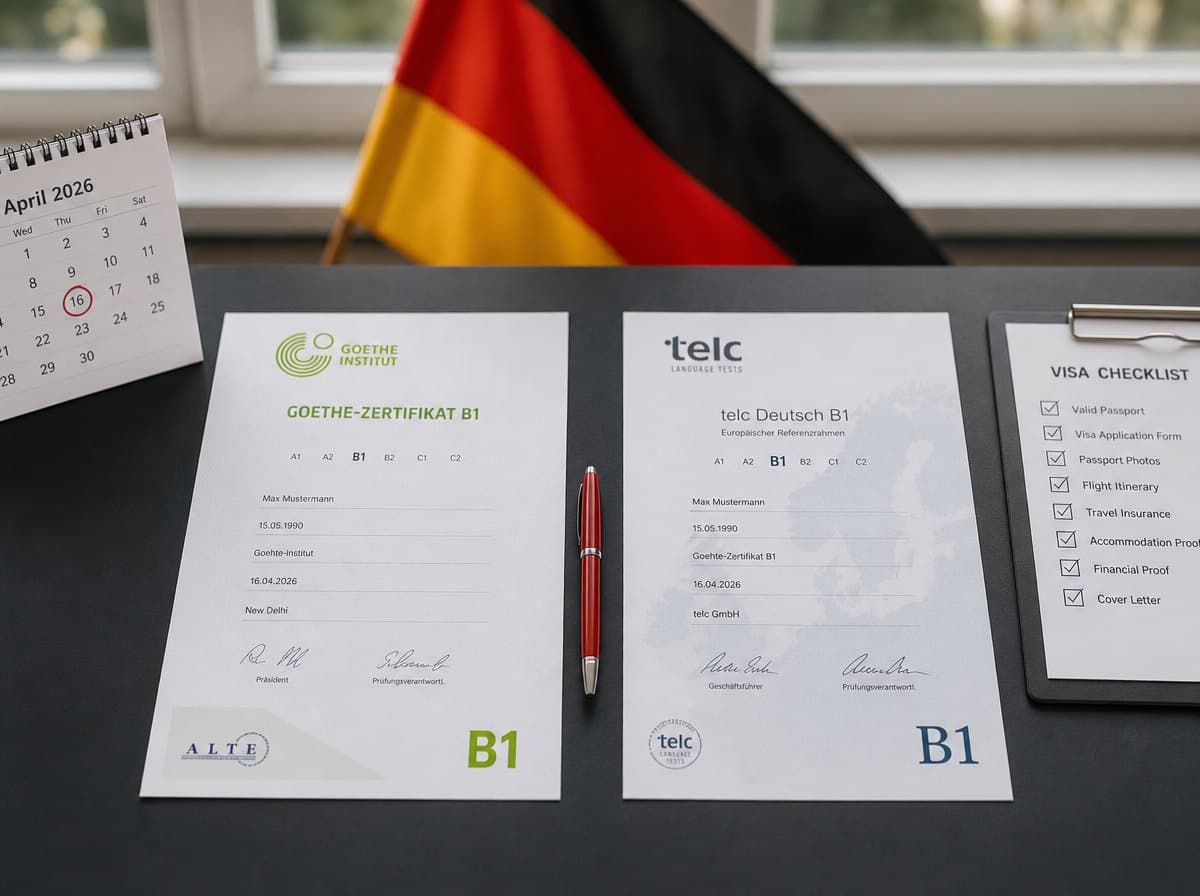
Most visa checklists and Ausbildung guides tell you the same thing: you need a B1 German certificate. What almost none of them tell you is that you have a choice about which one, and that choice can quietly cost you months.
Ask around and most people default to Goethe. It's the name everyone recognizes, the one with a century of brand weight behind it, the one that shows up first in every Google search. So people book a Goethe exam, then discover the nearest available B1 slot in their city is four months out. By the time they're holding the certificate, their visa appointment or Ausbildung start date has already slipped.
Telc exists, tests the same four skills, and is recognized by the exact same authorities. Almost nobody mentions it early enough for it to matter.
What the two certificates actually test
There isn't much daylight between them on content. Both Goethe and telc run candidates through reading, listening, writing, and speaking at whatever level you're sitting for, A1 through C1 and beyond. Both use the CEFR framework. Both hand you a certificate that says, in effect, "this person can function in German at this level." If you studied for one, you're prepared for the other with maybe a week of adjusting to format quirks.
The gap isn't in what they measure. It's in who accepts them, how fast you can sit the exam, and what it costs to get there.
Where each one actually gets you
For citizenship and residence permits, both are explicitly accepted. Telc B1 is recognized by every German immigration authority, and Goethe B1 carries the same weight. Neither has an edge here.
For the Ausbildung visa, which legally requires only B1, both certificates clear the bar cleanly. The harder question, as I've written about before, is whether B1 is even the right target once employers get involved, since most training contracts in nursing and other regulated fields quietly expect B2.
For the Chancenkarte and skilled worker routes, both work identically, since the points system reads the CEFR level, not the issuing organization.
Where it gets more complicated is university admission. If your goal is a bachelor's or master's taught in German, neither a Goethe B1/B2 nor a telc B1/B2 will get you through the door on their own. Universities generally want DSH or TestDaF, which sit at a different level and test academic language specifically. A B1 or B2 certificate from either provider is a stepping stone toward that, not a substitute for it.
The part that actually decides which one you should book
Here's where the real difference shows up: seat availability.
Goethe centers in major Indian cities, Bangalore especially, routinely fill B1 and B2 slots within hours of opening registration. Popular dates disappear before most people even think to check. Because Goethe is the recognizable name, demand concentrates there, and the supply of seats hasn't scaled with it.
Telc runs through a wider network of partner institutes and private language schools rather than a smaller number of flagship centers, which in practice means more available dates and less competition for any single slot. If your deadline is three months away and the nearest Goethe center is fully booked through that window, telc is often the faster route to the identical outcome on your visa file.
Cost is close enough not to matter much. Goethe B1 or B2 typically runs somewhere between 100 and 250 euros depending on level and location. Telc sits in a similar range, usually 120 to 200 euros. Neither is meaningfully cheaper once you factor in prep materials either way.
Validity is rarely the deciding factor either
Neither certificate carries a formal expiration date. What matters more is that some embassies and authorities want proof that's reasonably recent, often within the last year, regardless of which body issued it. If you're planning to sit the exam well ahead of your actual application, check the specific requirement for your visa category rather than assuming an old certificate will automatically hold up.
So which one should you actually book
If your deadline gives you real breathing room, four months or more, and you live near a major Goethe center, either works fine and Goethe's international name recognition is a nice bonus if you're planning to move around beyond Germany later. If your timeline is tighter, or you're outside a big metro area, check telc availability before you assume Goethe is the only option. The certificate itself won't matter to a case officer. Getting the exam booked, taken, and the result in hand before your deadline will.
This is also where a lot of people lose time they didn't need to lose. Getting from A2 to a solid B1 that will actually pass either exam is less about the app you use and more about consistent, deadline aware practice, which is the exact gap Germanly is built to close for learners who don't have a language school around the corner and need a plan that works backward from an actual date on the calendar.
Pick the certificate you can actually book. The exam board's logo has never once decided a visa outcome. Being ready and having a seat has.
Start your own German story
A1 to B2 — vocabulary, grammar, real audio and AI feedback. First three lessons free.