Germany Is Cutting Visa Processing to 27 Days. Your German Still Sets the Real Timeline
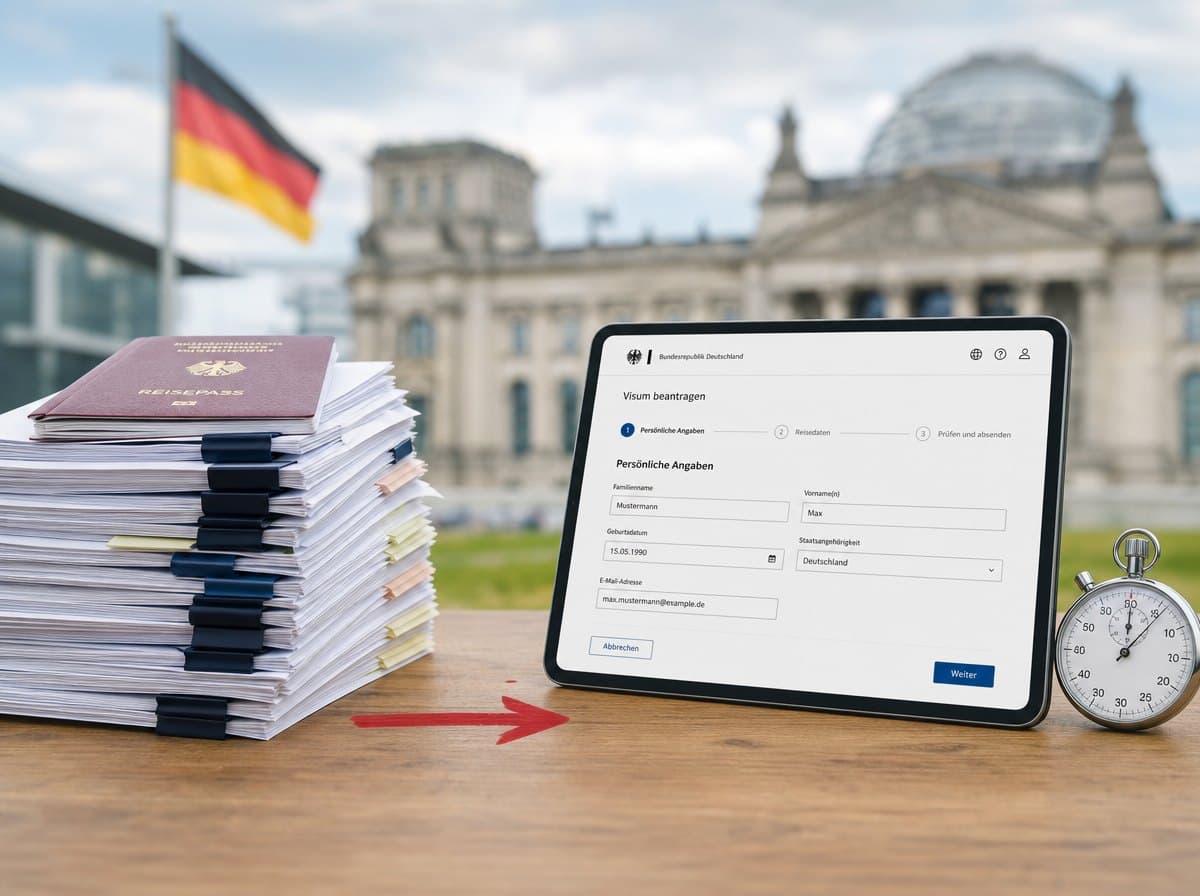
Germany's Directorate General for Migration and Home Affairs published a full review of the 2023 Skilled Immigration Act at the end of February this year, and one number in it is worth sitting with. Between June 2024 and November 2025, German consulates issued 17,489 Opportunity Cards, the job search visa most people call the Chancenkarte, plus another 838 visas under the newer experience pillar for applicants without a formally recognized degree. That is not a pilot program anymore. That is tens of thousands of people who moved through a system that, until recently, was known mostly for how slowly it moved.
Labour Minister Bärbel Bas used the same report to confirm something bigger. A federal Work and Stay Agency is being legally established this year to connect consular visa sections, the Federal Employment Agency, and local immigration offices through one shared platform. Applicants and employers upload their documents once instead of resubmitting the same paperwork to three separate offices. Early pilot tests already cut average Blue Card handling time from 66 days to 27.
If you are somewhere in the process of preparing to move to Germany, that is genuinely good news. It is also a reason to think differently about your German timeline, not a reason to stop thinking about it.
What the agency actually changes
The Work and Stay Agency is a processing fix, not a requirements fix. It removes duplicate paperwork, gives back office systems a way to pre check applications for completeness before a human officer looks at them, and cuts the dead time that used to sit between a document landing on someone's desk and someone actually opening it. None of that touches what a visa route asks of your German, and none of it touches what an employer asks of you once you land.
We wrote before about how the legal German requirement on most work visas sits close to zero while the real requirement, the one employers set once you are actually working, sits much higher. That gap does not close because the paperwork moves faster. If anything, a faster process narrows the runway you have to close it yourself before you are expected to function on a shop floor or in a team meeting.
Here is the part that catches people off guard. When a visa took two or three months to process, your language study had that stretch of dead time built in for free. You were waiting on a government office anyway, so studying while you waited cost you nothing. Cut that wait to under a month, and the dead time disappears. Your German either arrives on schedule or it does not, and there is far less slack left to hide a late start.
The numbers behind the push
A few figures from the same report explain why Germany is moving this fast:
- An estimated 350,000 skilled workers retire out of the German labour force every year, a gap the country cannot fill from its own population alone
- Demand for the Opportunity Card and experience pillar routes has been strongest in IT, engineering, and skilled trades, exactly the sectors with the widest shortages
- Among refugees who arrived in 2015, 64 percent are now employed, and 90 percent of those jobs are regular, insured positions, which officials are citing as evidence that early language training pays off over the medium term
That last point matters more than it looks like at first read. The government is not just optimizing for how fast it can issue a permit. It is watching what happens to people years after they arrive, and the pattern it keeps finding is that early, serious language preparation correlates with people actually staying employed. A faster visa gets someone into the country. It does not predict whether they are still working there in three years.
What this means if you are applying now
If you are eyeing an Opportunity Card, a Blue Card, or one of the newer experience pillar routes, treat the shorter processing window as a planning input, not a reason to relax.
Start your German study before you submit anything, not after. If your paperwork used to buy you ten or twelve weeks of overlap and now buys you four, you need to have already closed most of the gap between where your German sits today and where the job you want actually requires it to be. The Chancenkarte's points system still rewards language directly, and we worked through exactly how many points a jump from A2 to B2 is worth if you are applying through that route specifically.
Book your Goethe or telc exam slot early too. A faster visa process does not speed up exam registration windows, which still open six to eight weeks ahead and still fill within hours in India. Being ready to apply the moment your visa clears is worthless if your certificate is still three months away.
This is the shift Germanly's course structure was built around from the start, pacing learners toward a level they can actually defend in an interview or on the job, on a timeline that assumes the bureaucratic side will eventually catch up to speed, rather than assuming it will stay slow forever.
The honest read
A single digital window connecting visa offices, the employment agency, and immigration authorities is a real improvement, and anyone who has dealt with German bureaucracy knows how overdue it is. But faster paperwork was never the part of this process standing between you and a job you can actually do well. Your German was. The agency just removed one excuse for delay. It is a good time to make sure it was not the only one you were relying on.
Start your own German story
A1 to B2 — vocabulary, grammar, real audio and AI feedback. First three lessons free.